
Furniture / Art
陶磁器産地で廃棄されるハマ根源的な行為を通し見える可能性
HAMA Reimaginedは陶磁器産地で廃棄されるハマについて思考し、手を動かしたプロジェクトです。
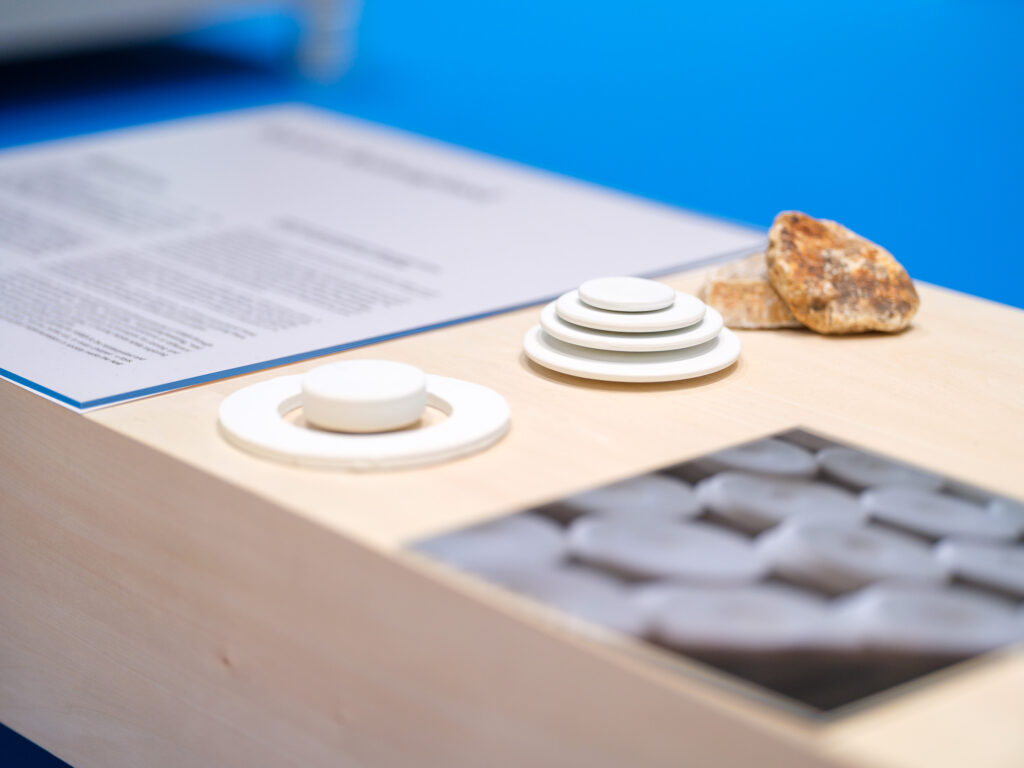
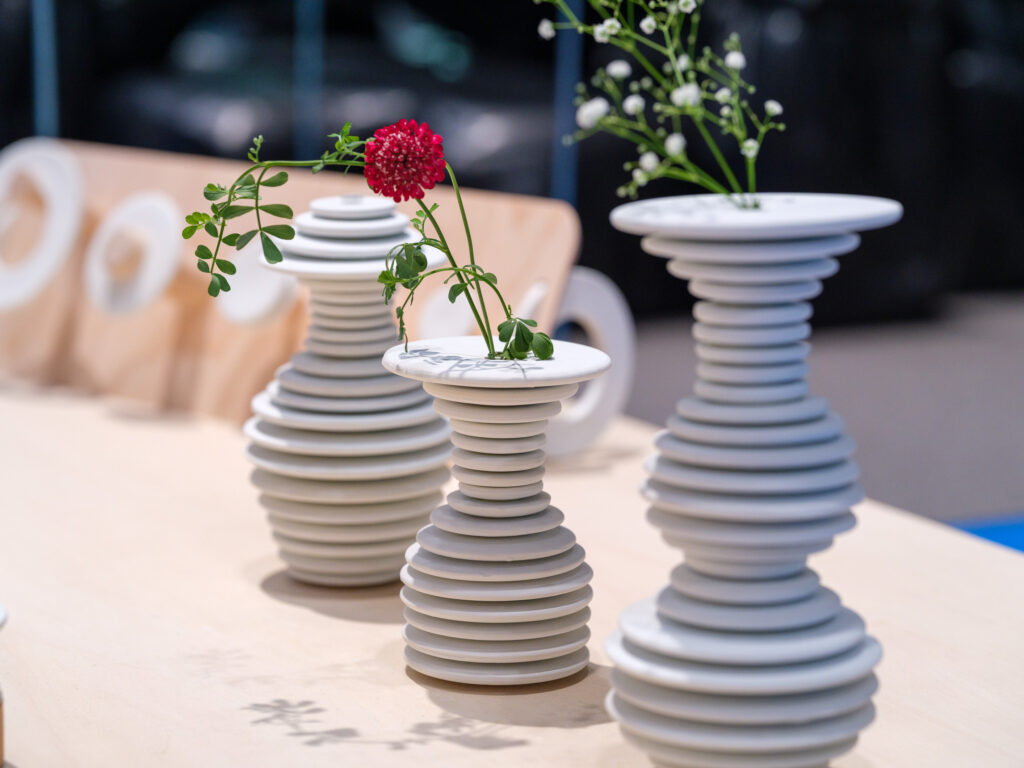
ハマとは焼物を焼成する際に棚板と作品がくっつくのを防ぐために置く座布団のようなものです。 窯ごとで土の配合が異なり、焼物の形状が違うので、形状やクオリティが違います。 今回使用したものは佐賀県有田焼のハマです。 メンバーの井上祐希は人間国宝井上萬二の孫であり、井上萬二窯を引き継いでいます。萬二窯は白の美しい磁器を生み出し、同じ土でハマをつくることも職人の仕事です。
ハマは丸く白い、一見なんの変哲もない焼物ですが、非常に美しいです。 しかしハマの役割はあくまでも作品をつくるための道具にすぎず、その役割を終えたら捨てられます。 焼物は土の状態だと再生できますが、焼成してしまうと化学変化を起こし、産業廃棄物に分類されます。 毎年焼物の産地ではハマが大量に廃棄されていきます。 デザイナーの鈴木と、メンバーの白水とで井上の工房に訪れた時にそれを見て、これはなにか形にできるのではないかと発想をはじめたのがプロジェクトの初動です。
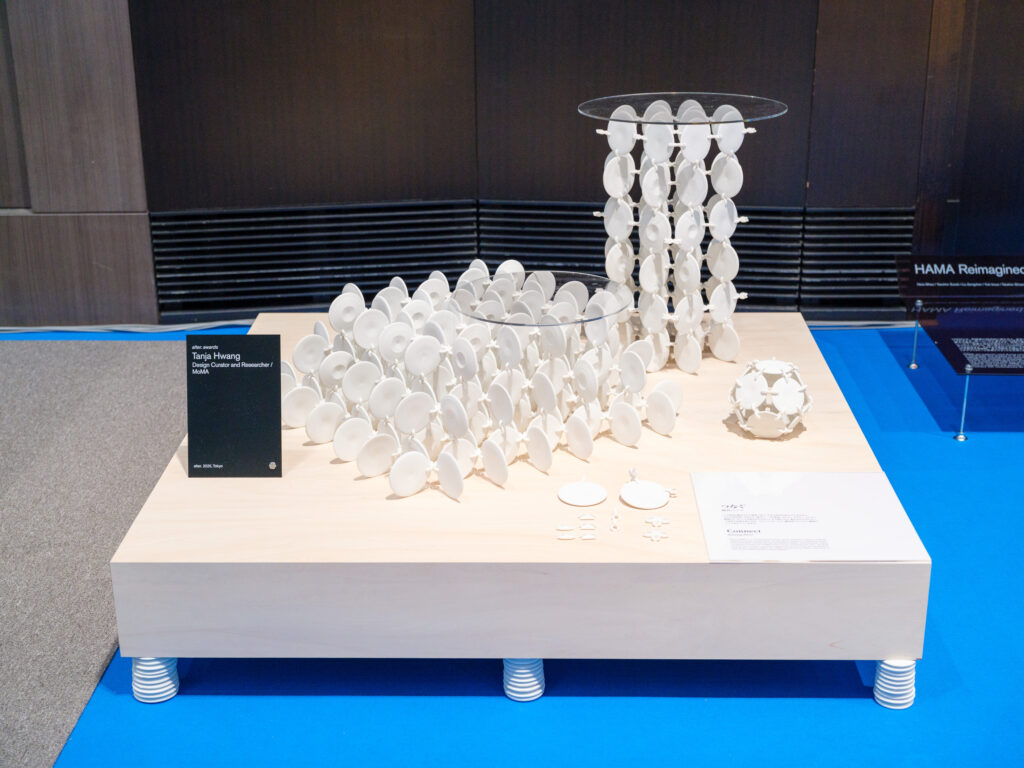
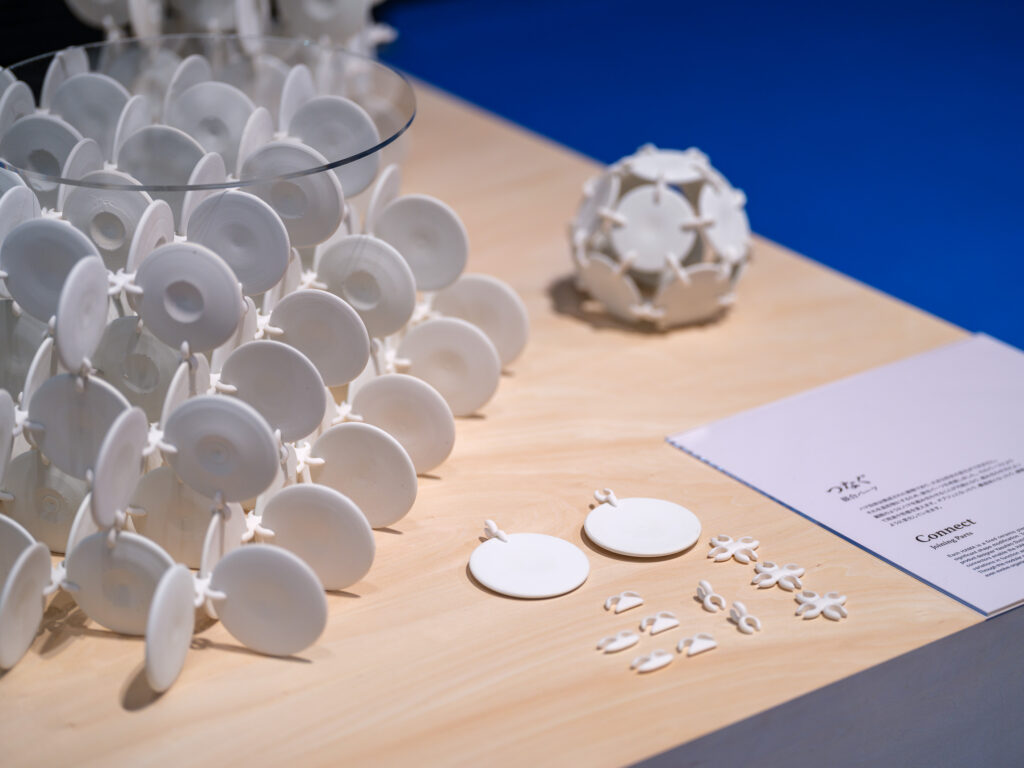
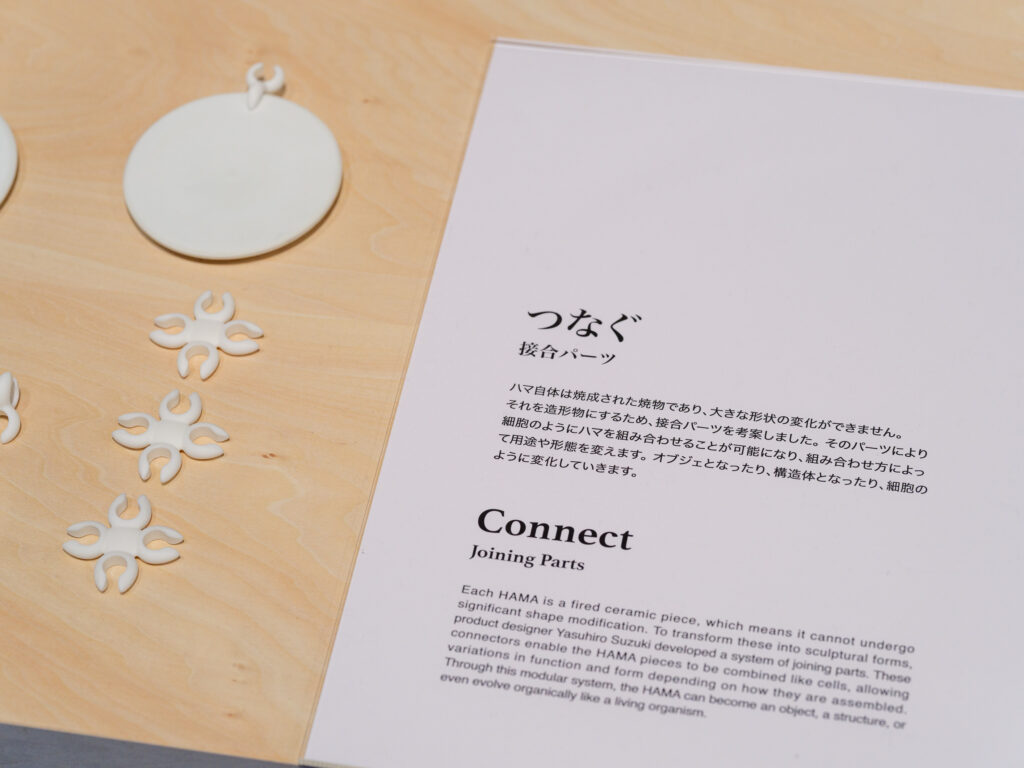
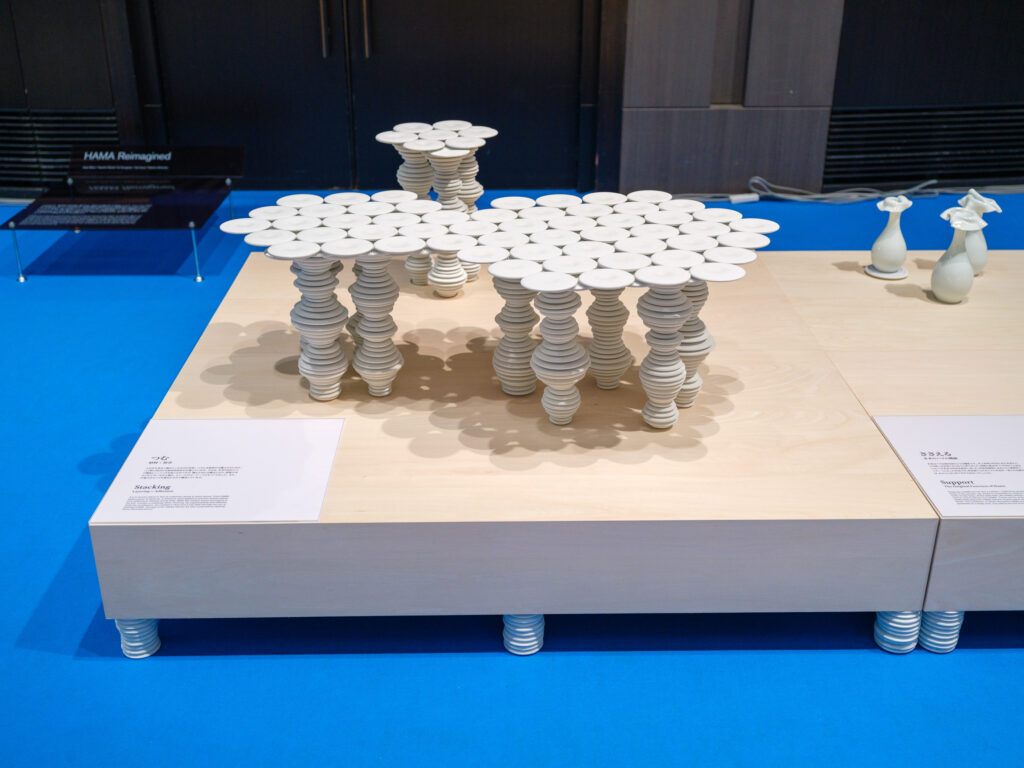
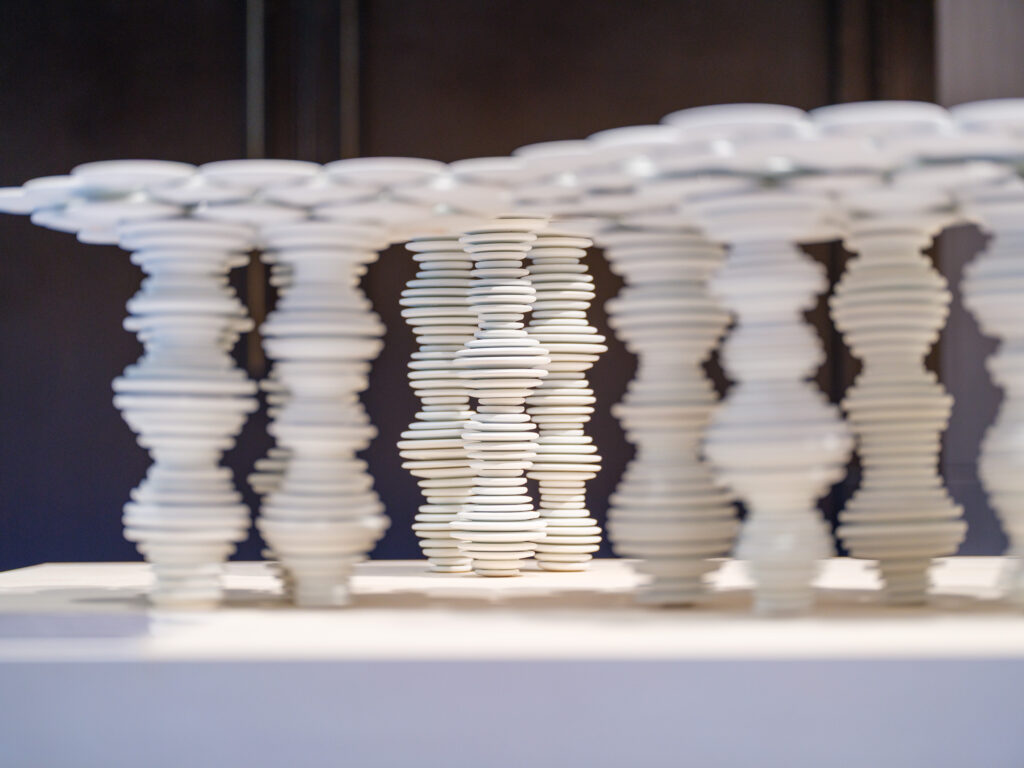
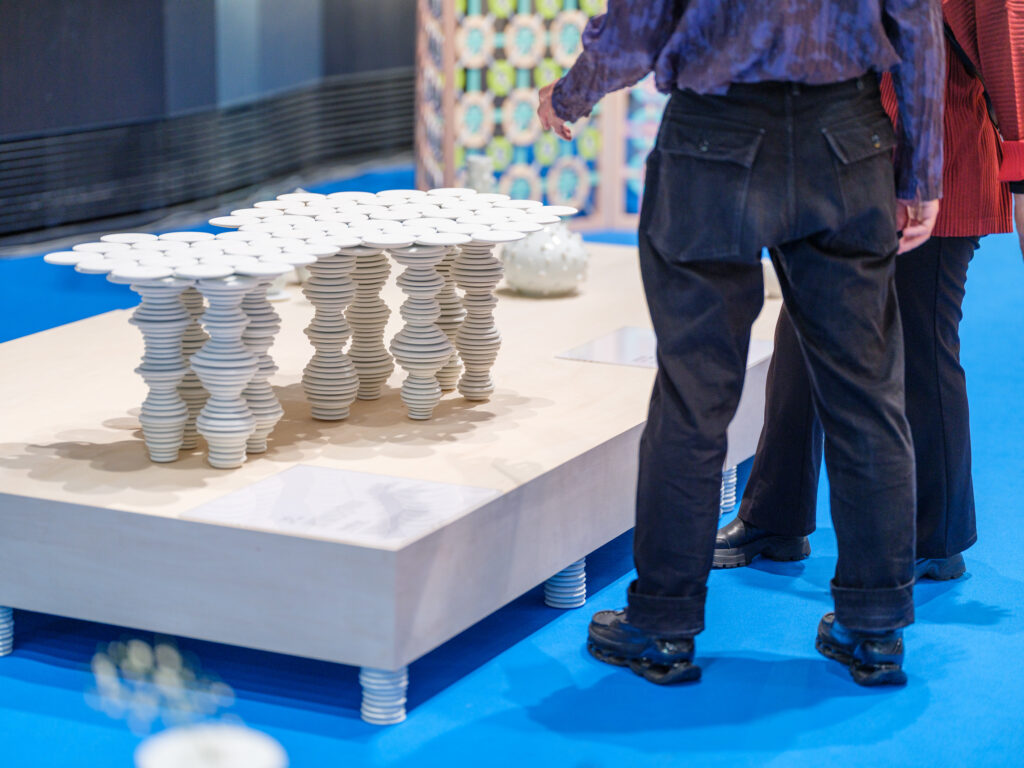
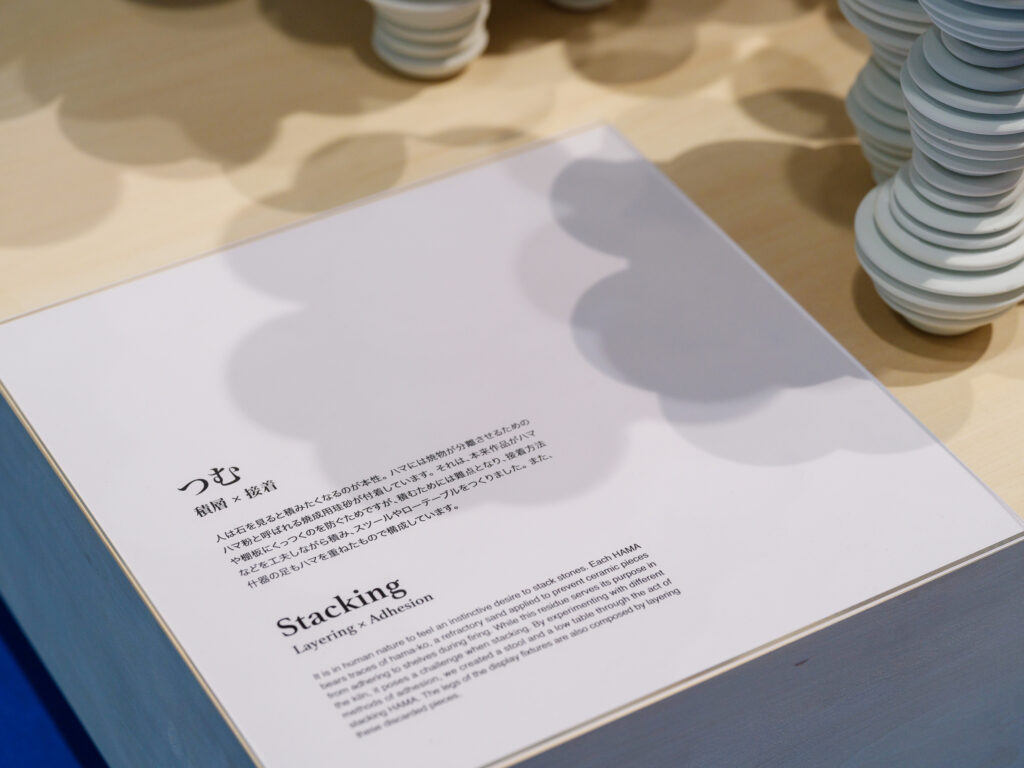
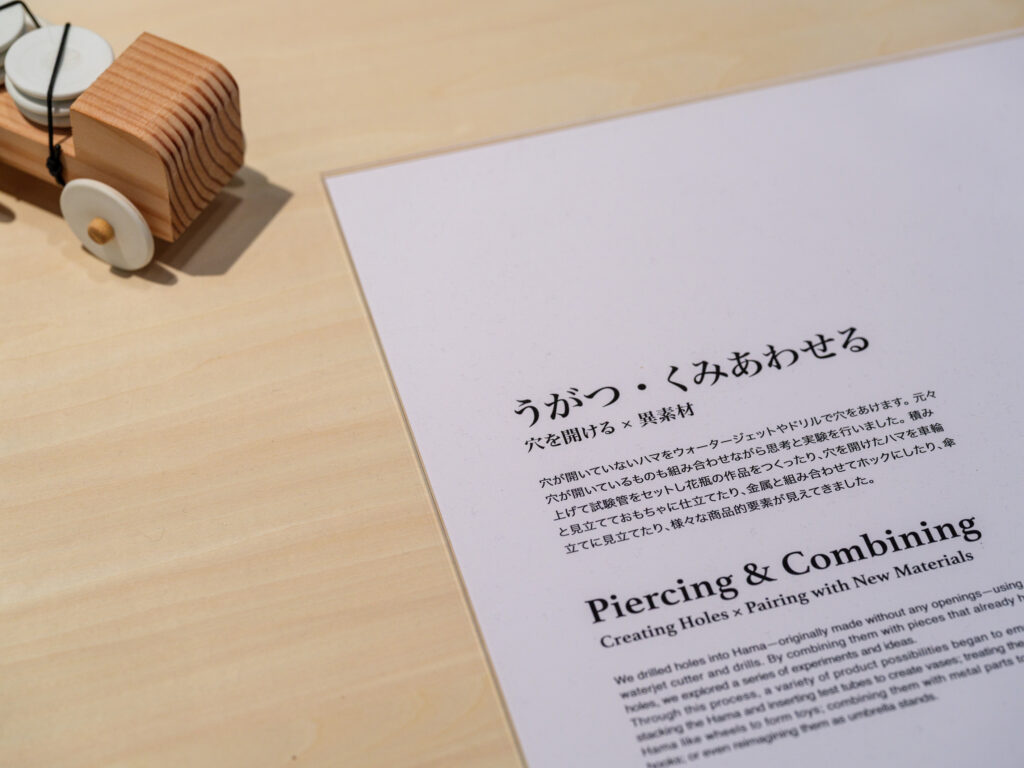
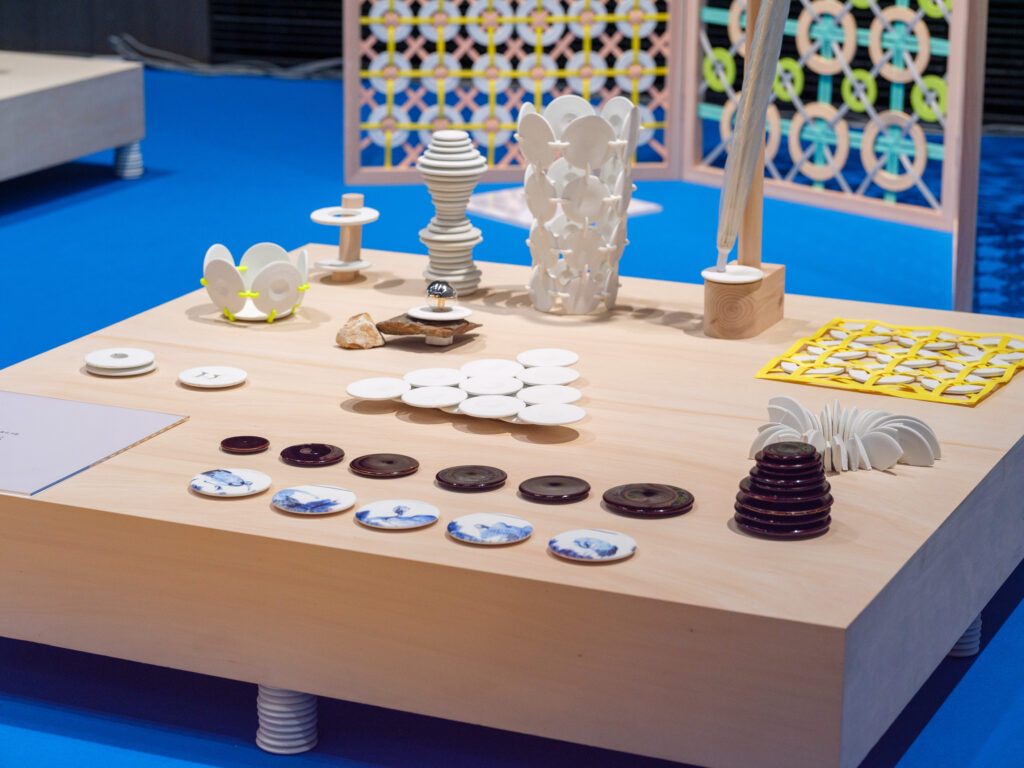
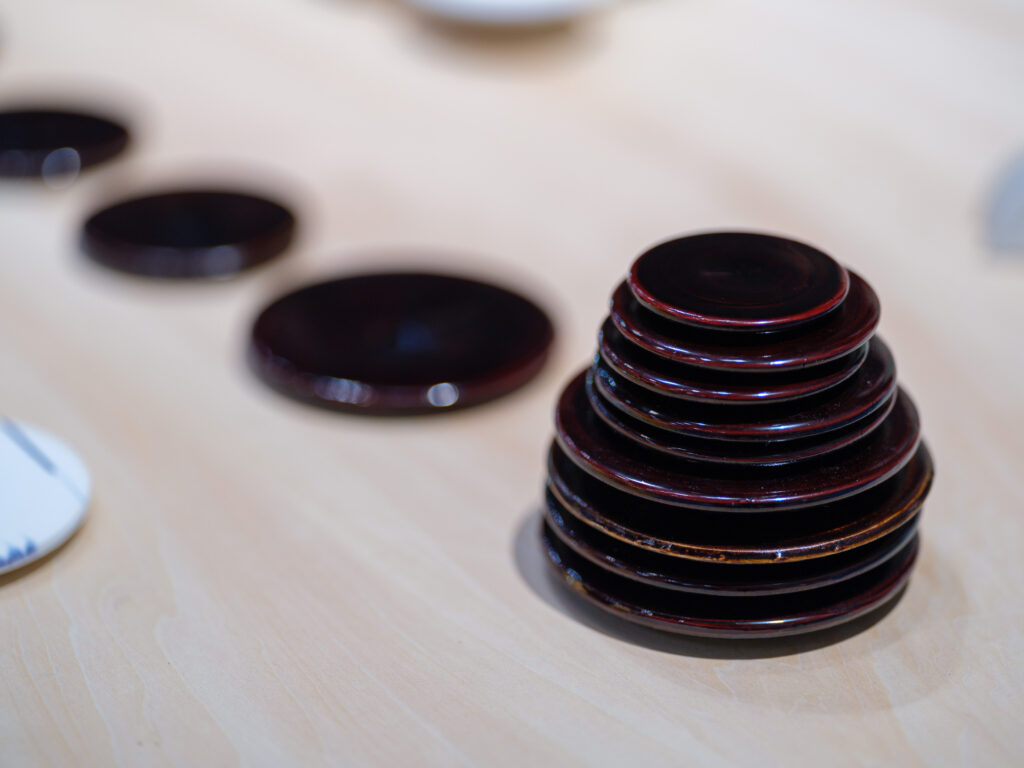
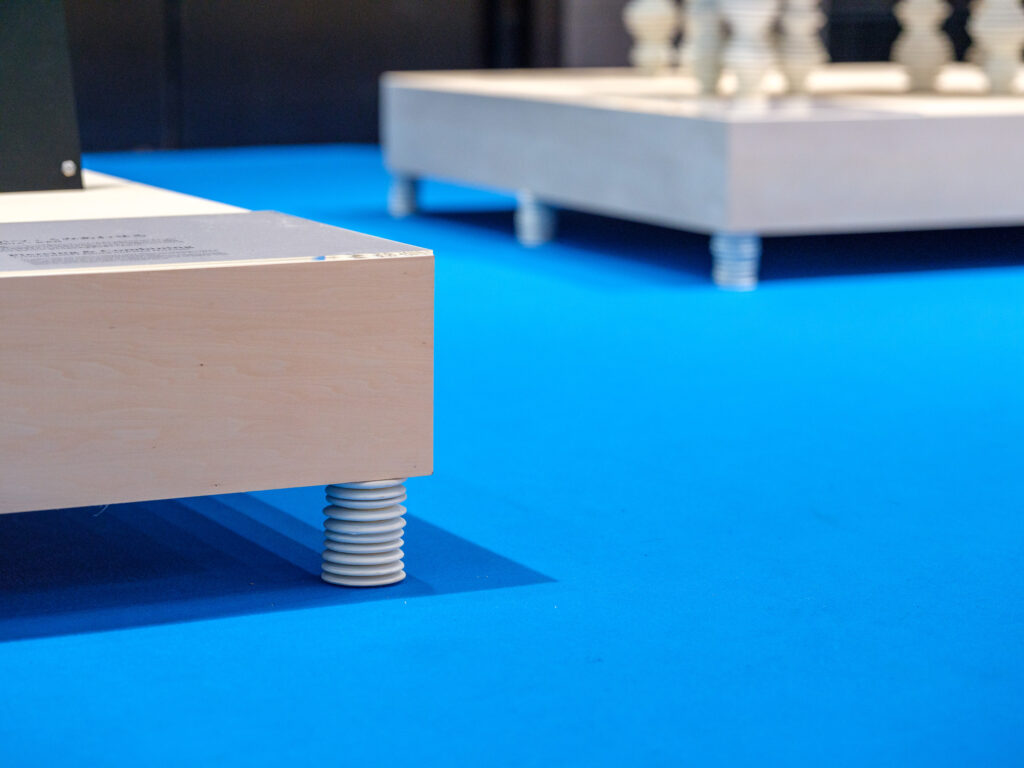
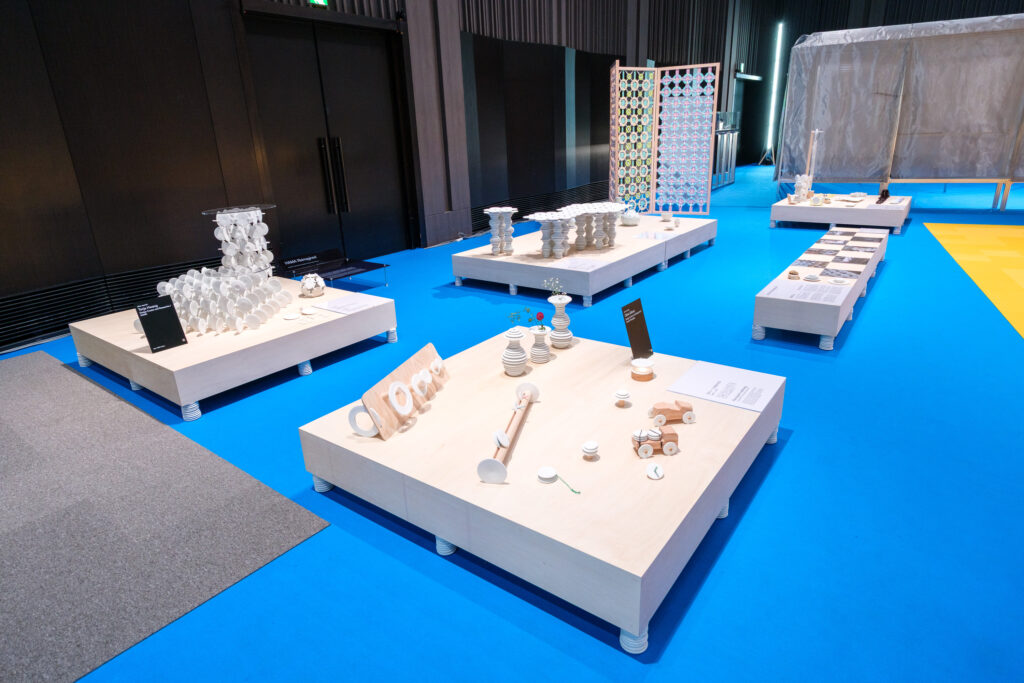
今回は、このハマをなるべく最小限の根源的な行為「つむ」「つなぐ」「くむ・あむ」「ぬる」の連続を通して形状と機能の模索をしました。 それと同時に異素材との組み合わせ、伝統的な技法、接合部や接着などに現代のテクノロジーも使いながら形を模索しました。 手を動かしながら考えるという行為が機能や作品につながっていきます。 産地で廃棄されるハマが家具や什器、パブリックアート、子供の玩具など様々な形で市場にアウトプットできる可能性がみえました。
この延長でしっかり社会に実装できるように活動を続けることが私たちの次のアクションです。
Exploring the potential of discarded Hama through fundamental acts of making
‘HAMA Reimagined’ is a project that explores and reconsiders HAMA, ceramic components discarded in pottery-producing regions, through both thought and hands-on experimentation.
A HAMA functions like a small cushion, placed between ceramic pieces and kiln shelves during firing to prevent them from sticking. The composition of the clay and the shape of the wares vary by kiln, resulting in differences in form and quality. The HAMA used in this project come from the porcelain kilns of Arita, Saga Prefecture.
One of the members, Yuki Inoue, is the grandson of Living National Treasure Manji Inoue and the successor of the Inoue Manji Kiln. At this kiln, craftsmen not only create porcelain of remarkable white purity but also produce HAMA from the same clay, a task considered part of their essential craftwork.
Although each HAMA appears to be a simple, round, white ceramic piece, it possesses a quiet beauty. However, its role is purely utilitarian, serving only as a tool in the creation process. Once used, it is discarded. While raw clay can be recycled, once fired it undergoes a chemical transformation and becomes classified as industrial waste. Each year, large quantities of HAMA are disposed of in pottery-producing regions.
When product designer Suzuki, member Shiramizu, and Inoue encountered these discarded pieces at the kiln, they began to imagine new possibilities for giving them form and meaning. This encounter marked the starting point of our project.
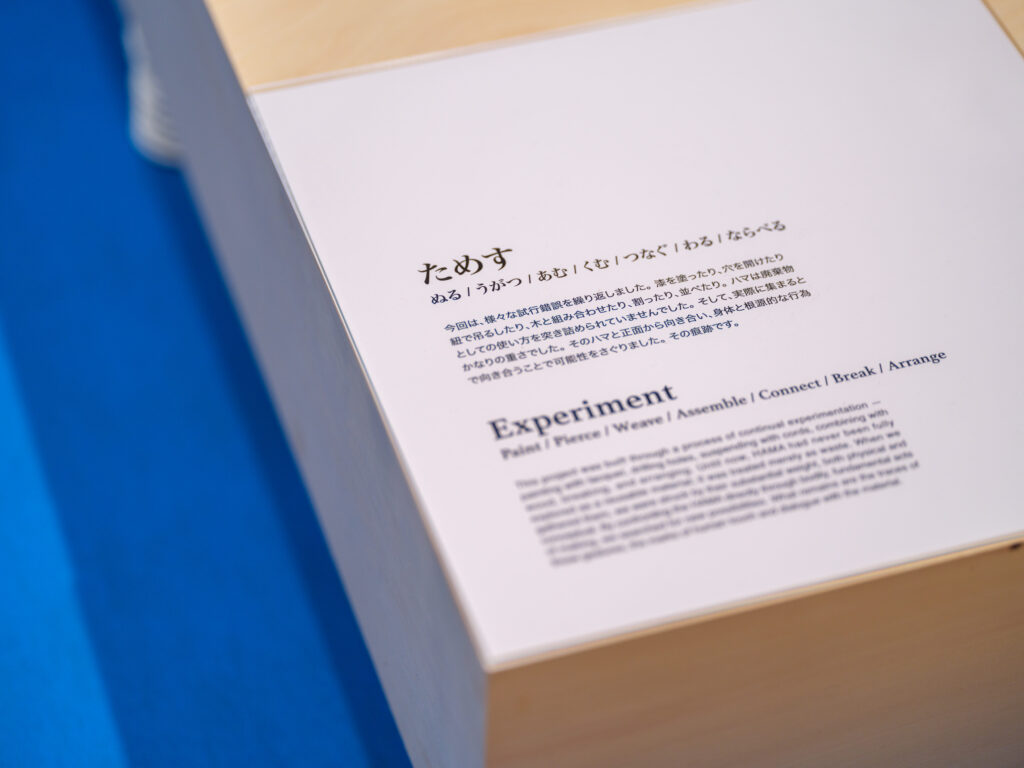
In this exhibition, we explored the physical and functional potential of HAMA through a series of fundamental actions: “stacking,” “connecting,” “assembling/weaving,” and “coating.” At the same time, we experimented with combinations of different materials, traditional craft techniques, and modern technologies for joining and adhesion. The process of thinking through making, of moving hands while exploring form, led to new functional and aesthetic outcomes.
Through this approach, we discovered the potential for HAMA to be reinterpreted and reintroduced into society as furniture, fixtures, public art, or even children’s toys. Continuing this exploration toward practical implementation in society marks the next step in our ongoing project.
Credit |
Client : alter. 2025, Tokyo
Photo:Yokota Naoaki